


The Headless WordPress Reality Check No One Wants to Hear
Every WordPress conference in 2025 features talks about headless architecture. Developers nod knowingly, agencies promise “future-proof” solutions, and clients hear “faster, better, more scalable.” But Kinsta’s latest report reveals the truth: less than 3% of WordPress sites actually go headless. The reason isn’t technical—it’s practical. Most projects don’t need the complexity, and the ones that do often regret it.
I’ve built both traditional and headless WordPress sites for enterprise clients. The headless projects always start the same way: excitement about React or Vue frontends, dreams of lightning-fast performance, and visions of content flowing seamlessly across channels. Six months later? The client can’t preview their content properly, the development team is burned out from maintaining two separate systems, and the hosting bill has tripled. Meanwhile, their competitor’s traditional WordPress site—properly optimized with caching and CDN—loads just as fast with half the complexity.

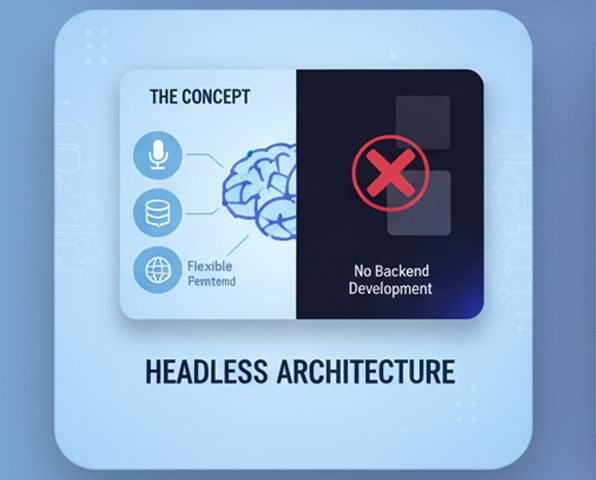
The disconnect is real. Headless WordPress sounds perfect on paper: blazing-fast front-end, flexible architecture, modern development stack. But Delicious Brains’ research shows the average headless project takes 2.5x longer to build and costs 3x more to maintain. You need specialized developers, complex deployment pipelines, and clients who understand why their admin preview doesn’t match the live site. Tom McFarlin’s analysis goes deeper: headless architectures require ongoing synchronization between backend and frontend teams, version management across multiple repositories, and sophisticated error handling for API failures.
Post Status surveyed 500 WordPress agencies about their headless experiences. The results were sobering: 68% of agencies that attempted headless projects reverted to traditional WordPress for subsequent builds. The main complaints? Preview functionality, plugin compatibility, and client training requirements. When your client needs to understand API endpoints just to update their homepage, you’ve over-engineered the solution.
Here’s the uncomfortable truth: traditional WordPress with modern optimization beats headless for 95% of use cases. WP Engine’s performance data proves it—properly cached WordPress sites hit sub-second load times without the architectural overhead. Edge caching, object caching, and modern PHP make traditional WordPress blazingly fast. Add lazy loading, critical CSS, and image optimization, and you’re matching headless performance without the complexity.
Headless makes sense for specific scenarios: native mobile apps pulling content, digital signage systems, or multi-brand content distribution. But for websites? The juice isn’t worth the squeeze. Before jumping on the headless bandwagon, ask yourself: are you solving real problems or just resume building? Because in 2025, the most innovative WordPress solution might just be a well-built traditional site that actually ships on time and budget.